
Hail can dislodge shingle granules, damage the asphalt mat, and affect roof vents or other exterior materials. Some concerns are difficult to assess from the ground. An inspection should document the condition and distinguish possible impacts from wear or other damage.
For Missouri homeowners, the useful questions are what was damaged, what work is needed, and what the insurance policy covers. This guide explains what to look for and how to take the next step without assuming every hailstorm requires a replacement.
How hail can damage asphalt shingles
An impact may remove part of the protective surface or damage the shingle beneath it. The result depends on the hail, roof materials, and existing condition. A roof can have an issue that is hard to recognize from the street, and a visible mark does not by itself establish functional hail damage.
Our guide to shingle granules explains why that surface matters and why loose granules alone are not a complete diagnosis.
Signs inspectors look for
- Localized surface loss: areas where the shingle surface differs from surrounding material.
- Possible impact damage: marks, fractures, or changes in the shingle that need a closer assessment.
- Roof accessory damage: dents or other changes on vents, flashing, and roof-edge components.
- Other exterior damage: affected gutters, downspouts, siding, or window components.
Dented metal can provide supporting context, but it does not establish the exact hail size, prove the shingles need replacement, or guarantee coverage. AMP photographs visible roof and exterior conditions so you and your carrier can review the findings.
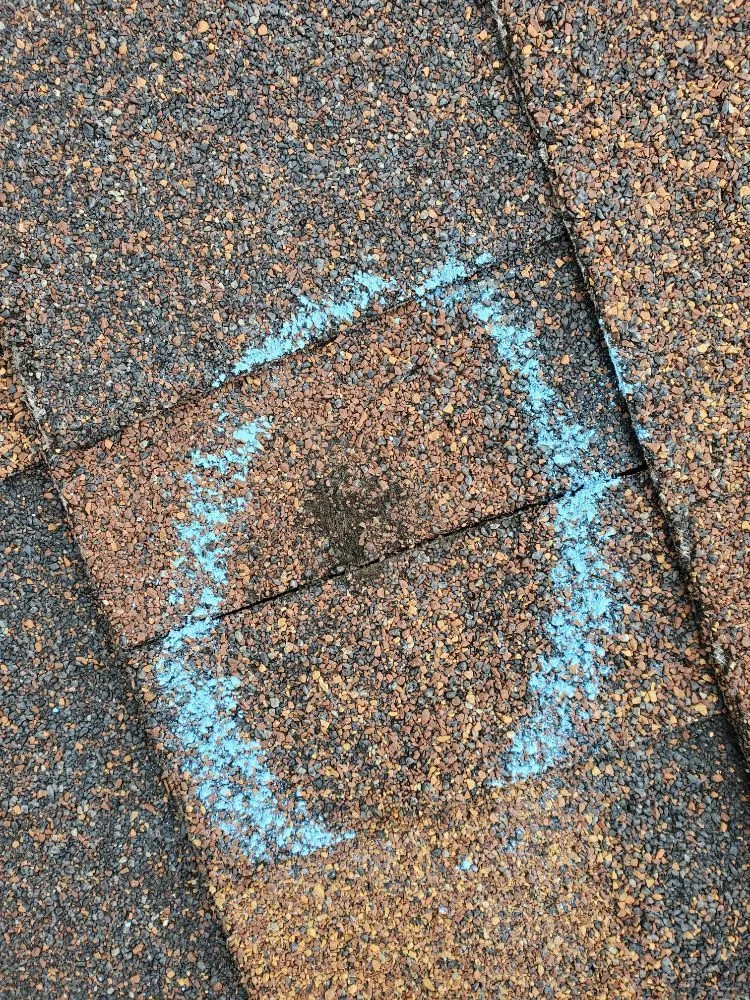
The chalk marks in this article's photograph show an area being examined during an inspection. They are not a diagnosis or an insurance decision.
Does hail damage always cause an immediate leak?
No. A damaged shingle may not leak immediately. Conversely, not every surface mark causes a leak or requires replacement. The inspector should explain the evidence, affected materials, and recommended scope.
There is no universal formula that converts a hail mark into a number of years lost from a roof's life. Avoid decisions based on a promised aging multiplier or an automatic replacement timeline. Ask for findings specific to your roof.
What to ask about impact-resistant shingles
If replacement is appropriate, ask about the impact rating of the exact product in the estimate. Do not assume that all architectural shingles or every product in one brand have the same rating.
A laboratory impact rating does not make a shingle hail-proof. Ask the contractor for the current product documentation and written warranty. Ask your insurer separately whether the selected product qualifies for a discount under your policy; a discount or longer warranty is not automatic.
See AMP's residential roofing services and our GAF roofing system and warranty guide for questions to discuss when selecting a replacement system.
What to do after a hailstorm
- Let the storm pass. Stay sheltered during severe weather and observe the property from a safe location afterward.
- Document visible changes. Keep the storm date and photograph accessible exterior areas and any interior water damage. Do not climb onto the roof.
- Request an inspection. Ask for photographs and an explanation of which materials were affected and why a particular repair scope is recommended.
- Contact your carrier about requirements. Review reporting deadlines, the deductible, exclusions, and settlement terms. An inspection does not replace the insurer's coverage decision.
Repair, replacement, and insurance next steps
Finding hail damage does not automatically mean the insurer will pay for a full roof replacement. Coverage and the approved repair scope depend on the policy and the carrier's review. Your responsibility for a deductible and any non-covered work should be clear before scheduling.
AMP can provide roof-related photographs and an estimate, discuss documented scope differences, and explain the work being proposed. Project timing depends on the agreed scope, materials, weather, and scheduling.
Read how roof insurance claim payments work for ACV, recoverable depreciation, and final documentation. Visit AMP's insurance documentation support page for help with the roof-related information.
Have concerns after a hailstorm?
Book a free AMP roof inspection in Greater St. Louis, Springfield, or Kansas City, Missouri. Get documented findings before deciding on the next step.