
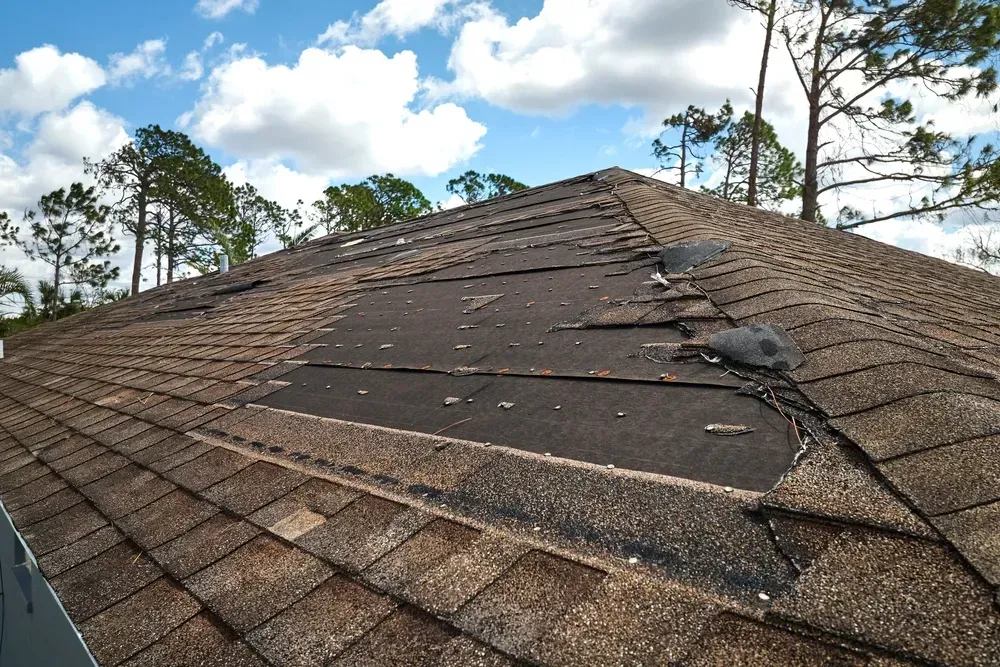
Missing or creased shingles, loose flashing, damaged ridge caps, and new leaks are reasons to arrange a roof inspection after high winds. You can look for obvious changes from the ground, but a roof inspection is needed to assess the condition, possible causes, and repair options.
This guide explains five warning signs Missouri homeowners can watch for, what each sign does and does not tell you, and how to document concerns for AMP's storm damage team.
1. Shingles are lifted, creased, or missing
Look for a section that differs from the surrounding roof: a missing tab, a shingle folded back, or an edge that appears raised. From a safe place on the ground, binoculars or a zoom camera can help you record the location.
Curling and cracking can also have causes other than wind. A roofer should check the shingle condition, attachment, and seal rather than diagnose the roof from a street photo alone. Avoid pulling on shingles or trying to press them back into place yourself.
2. Flashing or roof-edge metal has shifted
Flashing directs water at roof-to-wall transitions and around penetrations. A newly displaced piece of metal or an obvious gap deserves attention, particularly if you also notice a leak inside.
There is no single wind speed that proves flashing damage on every roof. Installation, condition, exposure, and the storm all matter. Learn how flashing fits into the complete asphalt roofing system before comparing repair recommendations.
3. Granule loss appears alongside other damage
Loose particles at a downspout or bare-looking patches on shingles are worth documenting. Granules can shed for several reasons, including normal shedding on a new roof, aging, and physical damage. Their presence alone does not establish that wind damaged the roof.
There is no reliable homeowner diagnosis based on a fixed cupful of particles per length of gutter. The condition of the shingles matters more than an isolated quantity. Our roof granule guide explains normal shedding and warning signs. Leave gutter and roof access to someone equipped to do it safely.
4. New water stains or leaks appear indoors
Record new ceiling stains, drips, or damp areas and when you first noticed them. A leak following a storm needs attention, but the timing alone does not identify its source. Condensation and other building problems can also cause moisture symptoms.
Keep people away from wet electrical fixtures or an unstable ceiling. Ask for professional help with active water entry and temporary protection; do not spray a hose at suspect areas to reproduce a leak.
5. Ridge caps or nearby exterior components are damaged
Look from the ground for missing ridge pieces, loose gutters, displaced downspouts, or debris resting on the roof. Note which side of the home is affected so the inspector can check the surrounding materials.
If you can safely see an accessible attic, photograph new moisture or an obvious opening in the roof deck. Light through a designed vent is not proof of roof damage. Do not step onto insulation or enter an unsafe attic to investigate.
What to do after a windstorm
- Wait until conditions are safe. Follow weather warnings and stay clear of downed power lines, hanging branches, and unstable materials.
- Document what you can see. Take ground-level exterior photos and accessible interior photos. Keep the storm date, discovery date, and any relevant repair records.
- Arrange a professional inspection. Ask for photographs, an explanation of the findings, and repair or replacement recommendations.
- Review your policy and reporting requirements. Your insurer decides coverage and payment. AMP can provide roof-condition documentation; damage does not automatically mean a full roof replacement.
If you decide to file, read our guide to deductibles, depreciation, and roof insurance claim payments. If hail was also reported, see how hail damage is assessed on asphalt shingles.
Concerned about your roof after high winds?
AMP offers free roof inspections across Greater St. Louis, Springfield, and Kansas City, Missouri. Get documented findings and discuss the next steps for your property.