
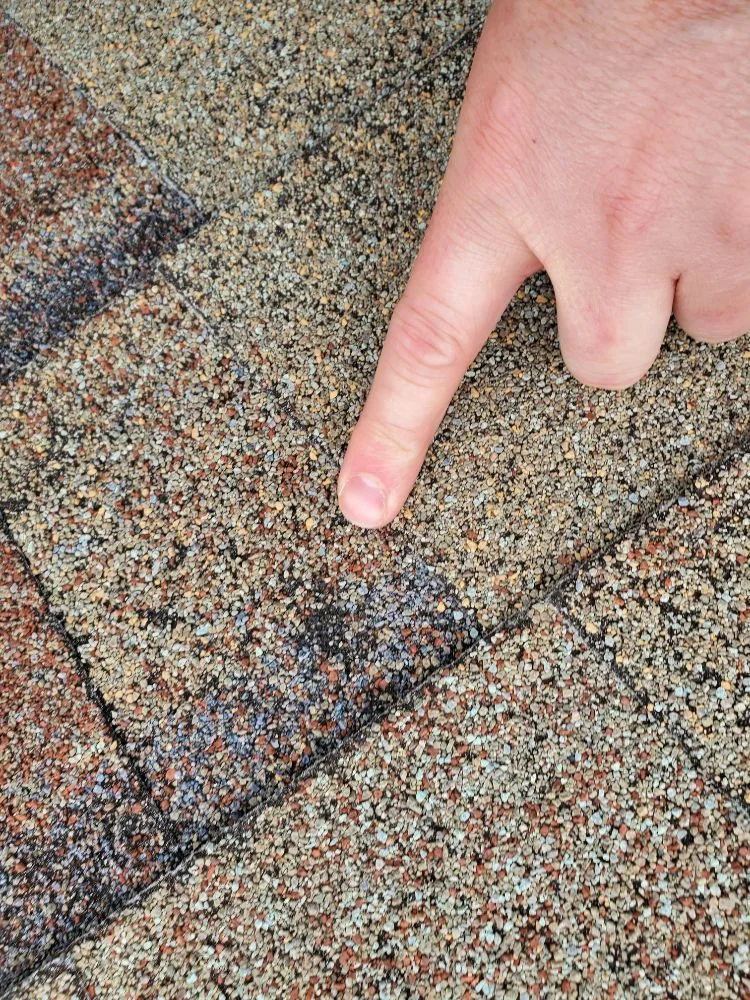
Roof granules are the small mineral particles on the exposed surface of asphalt shingles. They help protect the asphalt from ultraviolet sunlight and give shingles their color and texture. If you have ever noticed gritty material near a downspout, some of it may have come from this surface coating.
Finding granules does not automatically mean your roof needs replacement. Newly installed shingles can shed loose granules, and older shingles gradually weather. The useful question is whether the shedding matches the roof's age and condition, or whether the shingles have developed bare areas or other damage. This guide applies to asphalt shingles; metal, tile, and many low-slope roofing materials have different surfaces.
What is underneath those tiny particles?
An asphalt shingle typically has a reinforcing mat coated with asphalt, with mineral granules embedded on the weather-facing surface. The asphalt provides water resistance. The granules protect that asphalt and contribute to the finished appearance. A shingle therefore depends on both the coating and the material beneath it.
Granules are only one part of the roof's protection. Underlayment, flashing, roof edges, and installation details also matter. Our guide to asphalt roofing-system components explains how those parts work together. A roof inspection should consider the whole assembly rather than judge the roof from a handful of particles.
Why asphalt shingles need granules
Protection from sunlight
Ultraviolet exposure contributes to asphalt deterioration. The granule coating helps shield the asphalt from direct sunlight. Where coverage is substantially lost, the exposed asphalt has less of that protection. That is a reason to investigate the condition, even when there is no water stain inside the house.
This does not translate into a fixed number of years removed from a roof's life. Age, exposure, product, ventilation, installation, and the extent of damage all affect the roof's condition. An isolated photograph cannot reliably turn granule loss into a replacement date.
Color and appearance
Manufacturers combine colored granules to produce the shades and blends homeowners see from the street. This is why the surface looks textured rather than like a smooth asphalt sheet. Specialty products may use granules designed for additional properties, such as solar reflectivity. Those features depend on the specific product; they should not be assumed for every asphalt roof.
When shedding can be normal
Some loose granules remain on new shingles after manufacturing and installation. GAF describes these as extra surface granules that can wash off after the roof is installed. Early shedding alone does not establish a defective shingle or premature aging.
The pattern matters. Is this the first rain after installation? Is the loose material decreasing? Do the shingles still have reasonably uniform surface coverage? Tell the installer when the roof was completed and what you have noticed. If substantial shedding persists, changes the appearance, or accompanies visible damage, ask for an assessment rather than assuming it is harmless.
Older roofs also weather over time. Normal aging and damage can exist on the same roof, so “it's old” does not explain every patch of missing granules. The inspector needs to assess the location, extent, and other visible conditions.
What gutters and downspouts can tell you
Rainwater carries loose material toward the gutters and downspouts. A gritty deposit on a splash block or at a downspout outlet may be an early clue that the shingle surface deserves attention. It is a clue, not a diagnosis.
There is no universal household measurement, such as a cup of granules per length of gutter, that determines whether a roof has failed. Gutters collect material over different periods, and the area draining to each outlet varies. A recently cleaned gutter and one that has not been cleaned for years are not comparable samples.
Photograph what you can see safely from the ground and note when you first noticed it. Include whether the roof is new and whether a recent storm preceded the change. Avoid climbing onto the roof or brushing shingles to test how many granules come loose; roof traffic can itself disturb the surface.
Warning signs worth a closer look
An inspection makes sense when you notice one or more of these conditions:
- Bare or unusually smooth patches where the darker asphalt appears exposed.
- A clear change in surface coverage or color compared with nearby shingles.
- Continuing substantial shedding on a newer roof.
- Granule loss alongside cracked, torn, lifted, or missing shingles.
- New interior moisture, stains, or an active leak.
The last item deserves attention regardless of how many granules you see. Water may enter around flashing or a penetration even when the nearby shingles appear intact. Keep your observations specific: “This patch changed after the storm” is more useful than deciding the entire roof is ruined.
Can hail knock granules off?
Hail and storm debris can disturb a shingle's surface. However, granule loss alone does not prove hail damage, establish when damage occurred, or determine insurance coverage. Weathering, foot traffic, and other conditions can also affect the coating.
A professional inspection can compare the pattern with other roof and exterior findings. Learn more in AMP's hail-damage guide, or review our storm damage inspection service. If insurance is involved, the carrier evaluates coverage and payment under the policy. A contractor's photographs document conditions; they do not approve a claim.
Does granule loss mean repair or replacement?
The next step depends on what an inspection finds. A localized concern may call for repair, while widespread deterioration can justify a replacement discussion. The condition of the decking, flashing, and remaining shingles matters along with the surface coating. Adding loose granules back onto a shingle does not recreate the original manufactured surface.
Ask the inspector to explain what was found, show the affected areas, and distinguish aging from specific damage where the evidence supports that distinction. AMP's residential roofing service can help homeowners understand the roof condition and appropriate project options.
For a broader decision, our roof repair versus replacement guide explains how damage extent, repair feasibility, and written scopes fit together.
Not sure whether the shedding is normal?
AMP serves Greater St. Louis, Springfield, and the Kansas City Metro. If granules are collecting around your home or you see changing shingle coverage, ask AMP to take a closer look. Share the roof's approximate age and any photos you already have so the inspection starts with useful context.
Considering roof work in Chesterfield or Greater St. Louis? Review AMP’s roof repair and replacement options and local service information.