
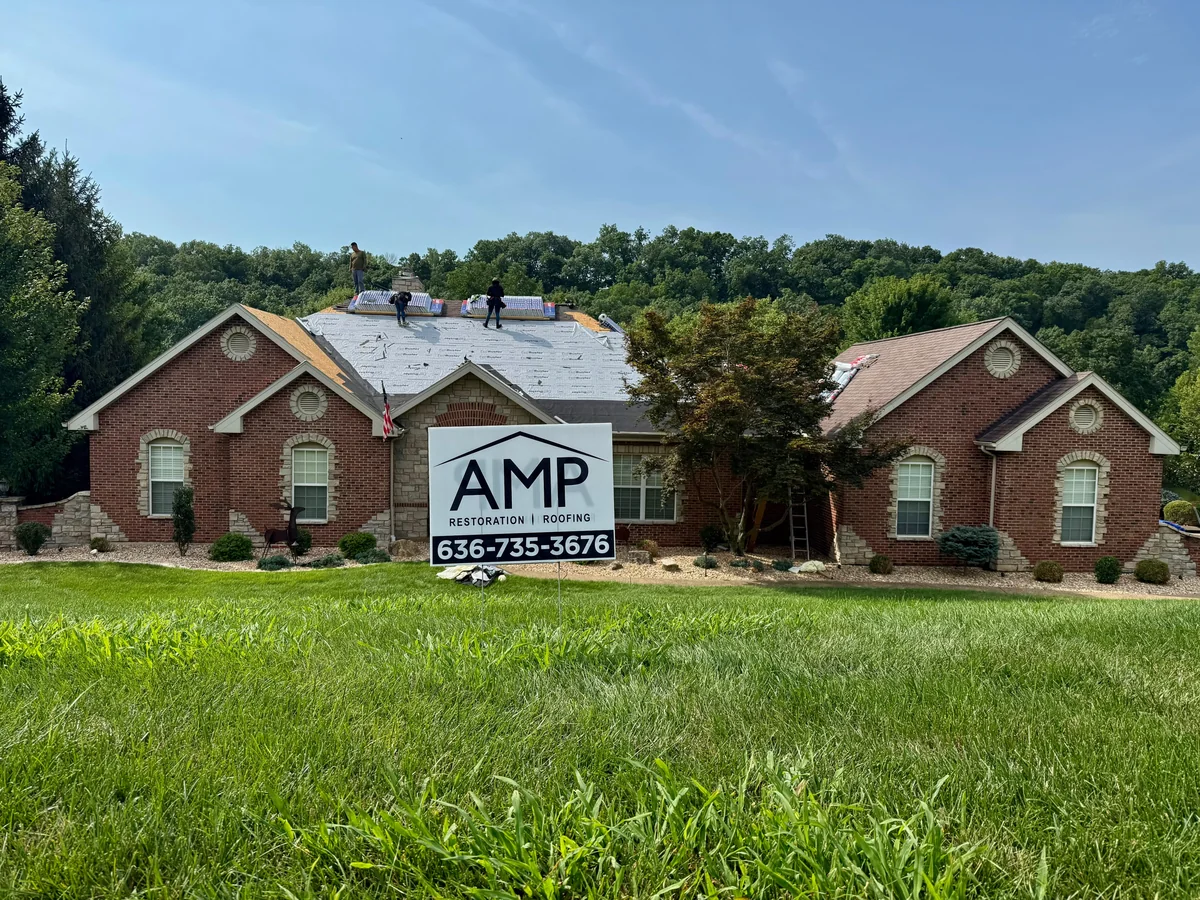
A roof repair may make sense when the problem is localized and the surrounding roof can support a sound repair. Replacement deserves consideration when problems are widespread or a limited repair would leave important defects unresolved. The useful question is not simply “How old is my roof?” It is “What work will address the documented condition, and why?”
This guide focuses on asphalt-shingle roofs. It helps homeowners around Chesterfield and Greater St. Louis compare an inspection recommendation and two written scopes. It does not diagnose a particular home from its age, a ceiling stain, or a photograph.
When a roof repair can make sense
A small damaged area or an isolated flashing problem can lead to a focused repair proposal. Ask the contractor to identify the affected location and explain how the repair connects to the surrounding roof. Our asphalt roofing-system guide explains the parts that may appear in that scope.
Replacing a few shingles is more than covering the visible spot. GAF's storm-damaged shingle bulletin explains that adjoining fasteners and seals may also need attention. The inspection should address nearby conditions rather than assume everything outside the obvious damage is sound.
Ask: “Can you complete this repair without leaving damaged neighboring shingles, and what is included to make the repair complete?” A written answer is more useful than a promise that the roof will last a certain number of additional years.
When replacement deserves a closer look
GAF's repair-versus-replacement guidance distinguishes localized problems from significant or widespread issues. Ask to see which areas support the recommendation. Several unrelated trouble spots should prompt a discussion of the whole roof, rather than a separate price for each patch without an overall assessment.
Decking and roof-system details matter too. The Asphalt Roofing Manufacturers Association describes full replacement as removing the covering, repairing damaged substrate, and installing a new covering. Removing the covering creates an opportunity to examine the deck. Ask how concealed conditions will be documented and priced if they cannot be fully evaluated before removal.
A replacement proposal should explain its scope. “New shingles” does not tell you how flashing, underlayment, roof edges, or ventilation are being addressed. Likewise, a sagging roof deserves evaluation of the underlying structure; it should not be treated as an appearance problem solved by a new covering.
Can you replace just one roof slope?
A roof plane is one sloping surface. Replacing a plane can be an option between individual-shingle repair and whole-roof replacement. GAF's bulletin notes that this may be possible when damage is confined to one plane. It is an option to evaluate, not a rule that applies to every storm-damaged roof.
Ask how the proposed work will meet neighboring planes at hips, ridges, valleys, and walls. Have the contractor explain what will be replaced, what will remain, and which connecting details are included. Make sure the written scope identifies the roof area clearly.
What to ask after a roof inspection
Request an explanation you can follow from the photographs to the proposed work. Useful questions include:
- Where is the problem, and what do the photographs show?
- Is it localized or present across several roof areas?
- What was observed about nearby shingles and connecting details?
- Which areas could not be inspected, and why?
- Is the deck condition known, or will some findings depend on removal?
- What repair options were considered, and why were they included or ruled out?
These questions are a way to compare explanations, not a checklist for climbing onto your roof. GAF recommends ground-level and interior observations and warns that roof access can be dangerous. Share your leak history and previous repair records with the inspector. A handful of roof granules alone does not answer all of these questions.
Compare the written scopes, not just totals
A repair and a replacement are different amounts of work. Before comparing their totals, check what each price includes. Use this worksheet when reviewing proposals:
| Detail | Repair proposal | Replacement proposal |
|---|---|---|
| Area | Which shingles or detail will be repaired? | Which planes and roof coverings will be removed? |
| Connections | How will surrounding seals and fasteners be addressed? | Which flashing, edge, ridge, and valley details are included? |
| Concealed work | What happens if more damage is found? | How is decking work documented and priced? |
| Materials | Which replacement product will be used? | Which products and system components are specified? |
| Terms | What workmanship terms apply to the repaired area? | What material and workmanship documents will be provided? |
| Exclusions | Which remaining conditions are outside this scope? | Which work or charges are not included? |
Ask how changes must be approved and how the completed work will be documented. If two contractors recommend different options, compare their findings and assumptions first. A lower total may reflect a smaller scope. No universal price percentage can replace that explanation.
How age, matching, and warranties affect the decision
Roof age is useful background, especially when you have installation records, but it is not a diagnosis. GAF identifies materials, installation practices, and climate as factors that vary by property. Ask how the roof's actual condition affects repair feasibility rather than treating a birthday as an automatic replacement deadline.
Material compatibility and appearance are separate questions. GAF's limited warranty notes that replacement products may not exactly match because of product changes, weathering, or manufacturing variation. Ask to see the proposed material and discuss the likely visible difference. A matching concern does not, by itself, establish that a whole roof must be replaced.
Request the specific warranty documents that apply to the work and ask which area they cover. Do not assume a repair creates a new warranty for the entire existing roof. Our GAF roofing-system and warranty guide explains questions to ask about material and workmanship terms.
What if the roof is leaking or insurance is involved?
Report an active leak promptly and discuss suitable temporary protection with a roofing professional. Record what you can safely observe from the ground or inside the home. Permanent work should follow a documented scope; a temporary measure and a completed roof repair are different things.
If a claim is involved, keep the construction recommendation separate from the carrier's coverage decision. Ask your insurer what documentation it needs before permanent work begins. AMP does not decide coverage or payment. See our roof insurance claim payments guide for the estimate and payment process.
Discuss your options with AMP
Have a repair estimate, a replacement proposal, or an unresolved roof concern? AMP's residential roofing services support homeowners around Chesterfield and Greater St. Louis. Bring your available photographs, installation records, and earlier estimates so the discussion can focus on the condition and proposed work.