
A roof insurance claim may involve more than one payment. An initial check can reflect depreciation and a deductible, while a later payment may depend on completed work and the terms of your policy. Some policies settle roof damage differently and do not provide recoverable depreciation.
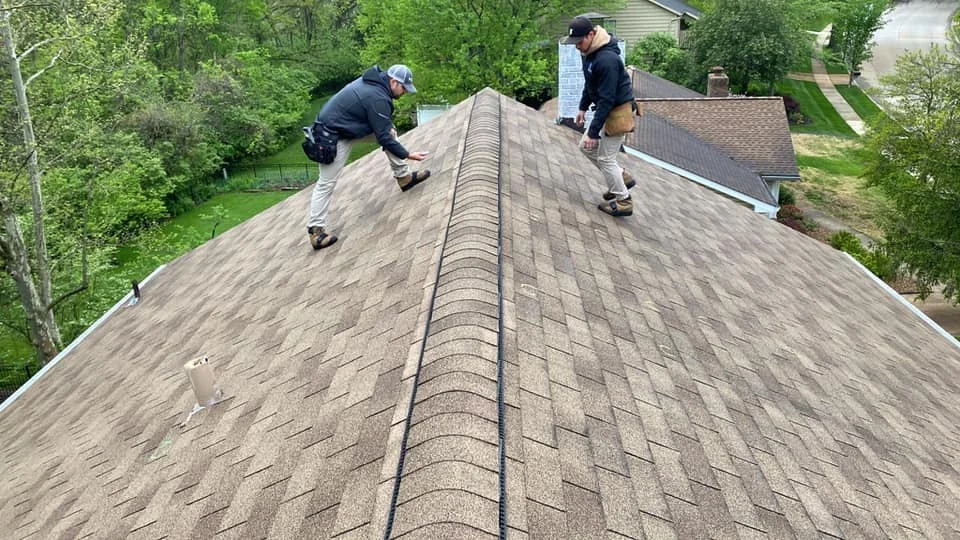
The insurance carrier determines coverage, claim approval, payment, and acceptance of the scope. AMP can inspect the roof and provide documentation of visible conditions and proposed roofing work. That documentation supports the carrier's review; it does not establish coverage or guarantee a particular payment.
Start with the damage and the policy
If you notice storm damage, photograph what is safely visible, record when you noticed it, and contact your insurer about the reporting process. Do not delay necessary temporary protection of an active leak while waiting for a full settlement. Ask the carrier what mitigation and documentation it requires, and retain related receipts.
A professional roof inspection can help identify visible damage and the work a contractor believes is necessary. Filing a claim remains a homeowner decision. Read your policy, declarations, and roof-related endorsements, and ask the carrier to explain the deductible, settlement basis, exclusions, and deadlines that apply. A neighbor's claim outcome does not tell you what your policy covers.
What happens at the carrier inspection?
The insurer may arrange an inspection by its adjuster or another person working on its behalf. The carrier uses the findings and policy terms to evaluate the reported loss. A contractor can provide roof photographs, measurements, and a description of observed conditions.
Ask how to submit those materials and whom to contact with questions. Keep the claim number and a record of communications. If AMP attends an adjuster inspection, its role is to explain roof-related findings. AMP's insurance claims support focuses on inspection and project documentation, rather than acting as a public adjuster or deciding policy coverage.
Read the estimate before reading the check
The carrier's estimate describes the work it has included and the associated amounts. “Scope” means that description of work: for example, particular roof areas, materials, quantities, and repair or replacement items. The contractor's proposal describes the work the contractor is offering to perform. Those documents serve different purposes and may not match initially.
Compare the roof areas, quantities, material descriptions, and included details. Ask for explanations of unfamiliar line items. A difference in totals deserves a specific comparison rather than an assumption that every contractor charge is insured. Optional upgrades, excluded work, or items the carrier has not accepted can remain homeowner costs.
When comparing the proposed work, our asphalt roofing system guide explains decking, underlayment, flashing, and other items that may appear in a roof estimate.
Deductible, ACV, and depreciation
The deductible is generally the portion of a covered loss assigned to you under the policy. It may be a fixed dollar amount or a percentage calculated on a policy-defined basis. Separate wind or hail deductibles may apply. Ask the carrier for the dollar amount for this loss instead of treating a percentage as a percentage of the roof bill.
Actual cash value (ACV) generally reflects the value of covered property after depreciation. Depreciation is a reduction associated with age or use. A replacement cost settlement basis may allow additional eligible payment after the property is repaired or replaced, subject to the policy's conditions and limits.
The estimate should distinguish recoverable and nonrecoverable depreciation. Do not assume that every withheld amount will be paid later. Roof-specific endorsements or settlement schedules can change the result. Ask: “Is this depreciation recoverable on my roof, what must I submit, and by when?”
A simplified payment example
Suppose a carrier accepts $15,000 in covered replacement cost, withholds $4,000 in recoverable depreciation, and applies a $2,000 deductible. In this simplified example:
- The initial payment is $15,000 minus $4,000 minus $2,000, or $9,000.
- If all $4,000 of depreciation becomes payable after the required work and documentation, total carrier payments would be $13,000.
- The $2,000 deductible remains the homeowner's share of this covered amount.
These are invented numbers to explain the arithmetic, not an AMP claim result or a prediction. Actual settlements can include limits, exclusions, multiple coverages, and payments constrained by incurred costs. The deductible is not removed by recovering depreciation, and the example does not mean a contractor's entire invoice will be paid.
Why a supplement may be needed
A contractor may identify additional necessary work or damage that was not included in the initial estimate. A supplemental estimate sets out the item, quantity, cost, and supporting evidence for the carrier to review. This could involve a measurement discrepancy or a condition discovered during removal.
Ask the carrier how additional items must be documented and reviewed before proceeding with disputed permanent work. A request is not an approval. Policy terms and the carrier's review determine whether an item is covered and payable. Keep any revised estimate with the original so you can see what changed.
Our roofing insurance supplement guide explains how to compare disputed items and organize the evidence for carrier review.
Final documentation and payment
For eligible replacement-cost benefits, the insurer may need invoices, photographs, or other proof that repairs are complete. Get the carrier's actual requirements and deadlines in writing. Keep the contractor's final invoice, completion records, supplements, payment notices, and your correspondence together.
Ask whether any additional action remains after you submit the documents. A completed roof does not automatically release every amount shown on an earlier estimate. Confirm the carrier's final calculation and which items, if any, remain unresolved.
If a mortgage company appears on the payment, contact it early about endorsements and release procedures. A check with multiple payees may require more than your signature. Lender procedures can affect when funds are available for the project, even after the insurer has issued payment.
Questions to ask before scheduling work
- What work has the carrier accepted, and what remains under review?
- Which deductible applies, in dollars?
- Is roof depreciation recoverable under this policy?
- What documentation and deadlines apply to additional payment?
- Does the mortgage company need to endorse or hold the funds?
- Which project costs are my responsibility beyond insurance payments?
Need help documenting roof conditions?
AMP serves Greater St. Louis, Springfield, and the Kansas City Metro. Talk with AMP about a roof inspection if you need photographs and an explanation of visible roof conditions for your carrier. For coverage or payment questions, request an explanation directly from the insurer. If a project includes costs outside the settlement, review the scope and payment terms before committing; financing options have their own application, approval, and plan terms.