
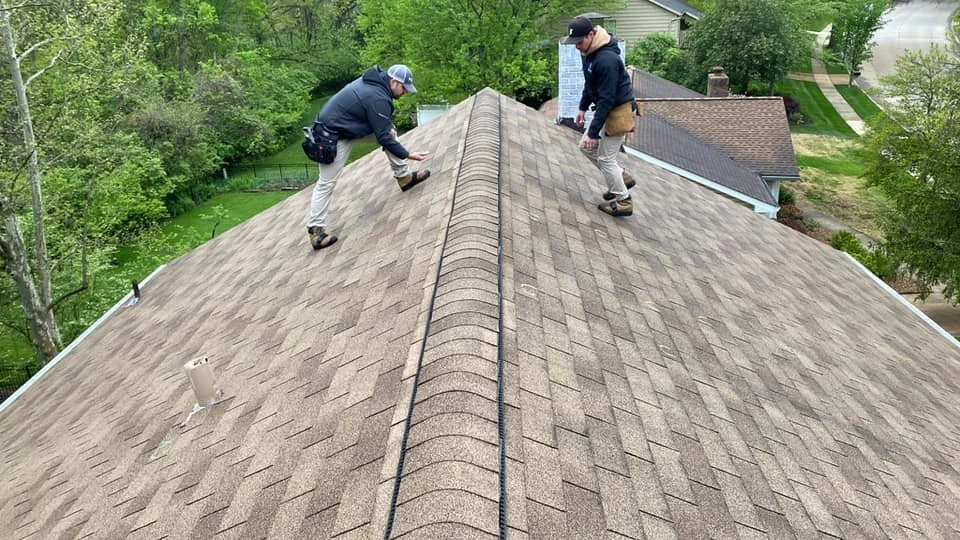
To prepare your roof and gutters for winter, check visible roof conditions from the ground, arrange needed gutter and downspout cleaning, note indoor moisture, and get unresolved concerns evaluated before snow or ice limits safe access. Start with what you can safely observe; leave roof access and elevated work to qualified professionals.
This seasonal checklist helps homeowners around Chesterfield and Greater St. Louis organize the next steps for an asphalt-shingle roof. It focuses on preparation and drainage. For a detailed explanation of individual roof parts, see our asphalt roofing-system guide.
1. Start with a ground-level roof check
On a clear day, walk around the home on stable ground. Binoculars or a camera zoom can help you see the roof without using a ladder. GAF's ground-level inspection guidance recommends looking for missing or damaged shingles, roof debris, and visible problems at gutters and flashing.
- Shingles: note missing pieces, raised edges, or a patch that looks different from the surrounding roof.
- Roof edges: look for loose gutter sections, separated downspouts, or visibly displaced metal.
- Nearby trees: arrange professional evaluation of limbs that could fall onto the roof; keep clear of overhead utilities.
- Indoor clues: record new ceiling stains or damp areas, including when you first noticed them.
Photograph each concern from a safe location and label which side of the home it is on. An observation is a starting point for inspection, not proof of its cause. If you noticed a change after high winds, our wind damage signs guide explains what to document.
2. Check the full drainage path
Roof runoff needs a clear route through the gutters, into the downspouts, and away from the home. Leaves and other debris can interrupt that route. Arrange cleaning before freezing conditions make access harder, and reassess after more leaves fall. The appropriate cleaning schedule depends on the debris around your property.
From the ground, check whether downspout sections are connected and the outlet is visibly blocked. During ordinary rain, if you can watch from a sheltered, safe location, note where water spills over a gutter or escapes a joint. Avoid outdoor observation during severe weather. Give the service provider the exact location rather than assuming every overflow has the same cause.
The Department of Energy explains why roof runoff should drain away from the foundation. Note where each outlet sends water and whether water collects beside the house. Ask a professional to review drainage that appears to return toward the building; the suitable outlet arrangement depends on the property.
GAF's winter maintenance advice emphasizes clearing debris and getting professional help when access presents a risk. Keep this homeowner check on the ground. Ask the cleaning provider to confirm that both the gutter runs and downspouts have been checked. For damaged or disconnected components, discuss AMP's gutter services and the work your property needs.
3. Review indoor moisture and attic concerns
Write down recurring winter moisture, earlier leaks, and any history of ice buildup at the eaves. Share existing attic photographs or inspection reports if you have them. Avoid entering an attic without safe access or stepping onto insulation to investigate.
Ice dams can develop when snow melts on a warmer roof area and refreezes at a colder edge. The Department of Energy identifies air sealing, adequate insulation, and ventilation appropriate to the roof assembly as ways to reduce heat transfer and the resulting snowmelt. A suitable assessment considers how the home is built.
Clean gutters help drainage, but gutter cleaning alone does not address heat escaping from the home. Ask the evaluator whether roof conditions, indoor air leakage, insulation, or ventilation need further investigation. Adding vents or insulation without understanding the existing assembly is not a universal solution.
4. Turn observations into a plan before freezing weather
Use your notes to separate cleaning needs from roof or gutter repairs. Request an inspection while access can be assessed in ordinary conditions, especially if you already have an unresolved leak or visible damage. Weather, access, and the work required affect scheduling; an inquiry does not establish an appointment window.
- List the concern. For example, write “water spills over the rear gutter beside the patio” rather than “the whole gutter system is bad.”
- Collect the history. Note when it happens, prior repairs, and whether it follows rain, wind, or melting snow.
- Ask what was found. Request photographs, the proposed work, and any areas that could not be evaluated.
- Confirm the next step. Ask what should be addressed first, what can be monitored, and how work will be scheduled.
A seasonal concern does not automatically call for a new roof. Use our roof repair versus replacement guide to compare recommendations when an inspection identifies work that needs doing.
5. Know when a winter problem needs help
Once snow or ice is present, keep roof access out of your homeowner checklist. Stay clear of falling ice and do not climb onto a slippery roof to inspect it. Report a new leak or recurring ice buildup to a qualified professional and explain what you can see safely.
University of Minnesota Extension explains that an ice ridge can obstruct melting snow and allow water to back up into the home. It also warns that some snow-removal methods can damage roofing. Ask a professional about methods suitable for your roof rather than attempting to chip or scrape ice yourself.
Keep a short record of the weather and where water appears. If there is a suspected structural hazard, such as a newly sagging ceiling, leave the affected area and seek urgent help. A photo or a snow-depth estimate cannot establish whether a roof is safe.
What to share when requesting an inspection
Send your property address, safe photographs, the location of the concern, and any previous repair information. Tell the team whether you are seeing an active leak, a drainage problem, or a change in the roof covering.
AMP's residential roofing team can discuss roof concerns, and our Chesterfield office is a local starting point for Greater St. Louis homeowners. Request a free inspection and have the team confirm service and scheduling for your property.