
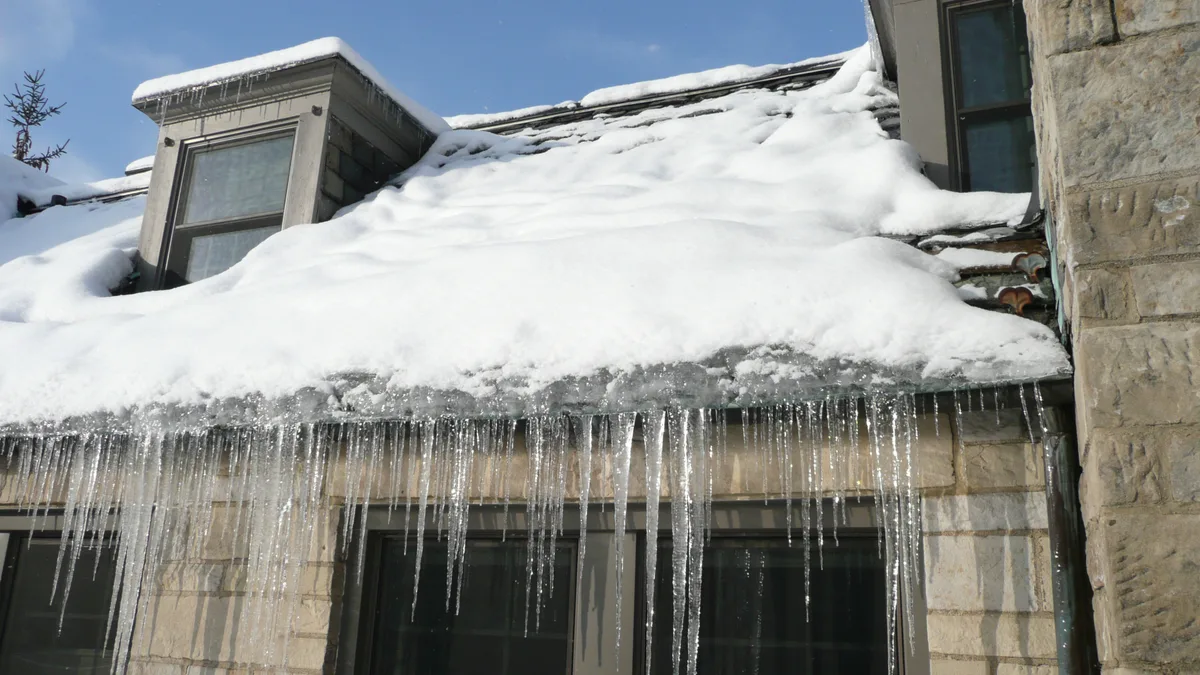
Photo and resized versions: Dmcroof / Wikimedia Commons, CC BY-SA 3.0. Cropped for layout. Illustrative example, not an AMP project.

An ice dam forms when melting roof snow reaches a colder section and refreezes into a barrier. More meltwater can collect behind that barrier and enter the roof. Long-term prevention starts with understanding why the roof is warming; an active leak needs a separate, prompt response.
For homeowners around Chesterfield and Greater St. Louis, the practical question is what to do about the ice you can see without creating another hazard. This guide separates safe observations, professional help, and prevention work. For a broader seasonal checklist, see preparing your roof and gutters for winter.
How an ice dam forms
Snow does not have to disappear from the entire roof for water to start moving. A warmer area can melt the snow touching it while an unheated roof overhang remains cold enough to refreeze the runoff. Repeated melting and freezing can build a ridge that interrupts drainage.
University of Minnesota Extension explains this temperature difference and the role of heat escaping from the house. Water held above the ice may find openings in the roof covering and reach the attic, insulation, walls, or ceiling.
That is why a recurring ice problem deserves more than a photograph of the gutter. The assessment needs to connect the visible roof condition with what is happening inside the roof assembly.
What to observe from a safe location
Visible ice is useful information, but a photograph cannot establish the exact heat source or prove that water has entered the house. Record what you actually see:
- Outside: the side of the home, ice along the roof edge, hanging icicles, and uneven areas of snow cover.
- Inside: new stains, damp finishes, or dripping, including which room and when you first noticed it.
- History: whether it recurs in the same place and whether roof, insulation, or ventilation work preceded the change.
Photograph from indoors or a safe ground-level position away from hanging ice. Keep the original images and dates so an evaluator can compare the pattern rather than rely on a description from memory.
What to do if there is ice or an active leak
Stay off a snowy or icy roof and keep people away from areas beneath hanging ice. Do not climb a ladder to chip, pry, or pull ice free. North Dakota State University Extension warns that snow removal can be dangerous, including around overhead power lines.
If water is entering the home, tell the professional you contact that there is an active leak, where it is appearing, and whether it is changing. Ask who can assess the roof safely and handle any necessary ice removal. Confirm the method is suitable for the roof covering; availability and scope must be confirmed with the provider.
Temporary drainage or removal does not resolve the heat-loss problem. Minnesota Extension distinguishes short-term relief from lasting corrections and advises allowing wet ceilings and walls to dry before interior repairs. Keep the immediate response and the prevention plan as two explicit parts of the discussion.
Preventing a repeat: air leaks, insulation, and ventilation
The Department of Energy's ice-dam prevention guidance emphasizes sealing air leaks, insulating appropriately, and coordinating roof ventilation. These measures work together; the right scope depends on how the home is built.
- Air leakage: ask whether warm indoor air is escaping around the attic access, wiring or plumbing penetrations, or other openings in the ceiling.
- Insulation: ask about gaps and continuity, particularly near roof edges and other tight areas, rather than assuming another layer alone resolves the problem.
- Ventilation: have the existing airflow path evaluated. In a vented attic, insulation should not obstruct the intended intake path.
NDSU explains that eave airflow and baffles can matter in a vented assembly. Our intake and exhaust ventilation guide covers the questions to ask before adding or changing vents. A larger exhaust vent or fan is not a substitute for evaluating the complete assembly.
Request written findings that distinguish observed defects from proposed improvements. Ask which trade will handle each part of the work and how the result will be checked.
Where gutters and leak barriers fit
Gutter maintenance supports drainage, but clean gutters do not correct heat escaping into a roof. If overflow also happens during ordinary rain, use our gutter-overflow guide to separate that problem from winter refreezing.
A leak barrier beneath the roofing is another part of the protection strategy. The Department of Energy describes eave membranes as protection against water intrusion, alongside measures that reduce heat transfer and snowmelt. The membrane does not replace that assessment.
GAF's ice-dam bulletin notes that even leak barriers have limits when backed-up water extends beyond protected areas and flashings. During roofing work, ask which areas need protection under the applicable product instructions and local requirements. Our roofing-system components guide explains how the layers fit together.
Questions to ask before approving work
- What evidence points to the cause of the recurring ice or leak?
- Does this proposal address immediate water entry, future ice formation, or both?
- Which roof, attic, insulation, or drainage work is included, and what needs a separate specialist?
- How will completed work be documented, and what should I monitor afterward?
Keep the photos, inspection findings, and written scope together. They make follow-up more useful if the condition returns and help you compare proposals that may address different parts of the problem.
Discuss winter roof concerns with AMP
AMP's residential roofing team can discuss roof concerns around Chesterfield and Greater St. Louis. Contact AMP with your address, the location of visible ice or water, and safe photos. The team can confirm service, scope, and scheduling for your property.
Sources
- University of Minnesota Extension: Dealing with and Preventing Ice Dams
- NDSU Extension: Reduce Ice Dam and Icicle Damage
- DOE Building America: Air Sealing, Insulating, and Ventilating for Ice Dam Prevention
- DOE: Eaves Sealed in Cold Climates
- GAF Technical Bulletin R-116: Ice Dams, Their Cause and Preventative Measures